
Dragon Age Shows How Studios Can Lose Their Own History
Game preservation is usually discussed as a problem outside the studio. Stores close, discs age, operating systems change, and players lose legal ways to access the work. Dragon Age exposes an earlier failure: a company can still own the files, trademarks, and source code while losing the practical knowledge required to make any of them useful. Ownership keeps an archive on paper. It does not teach a new team how the archive breathes.
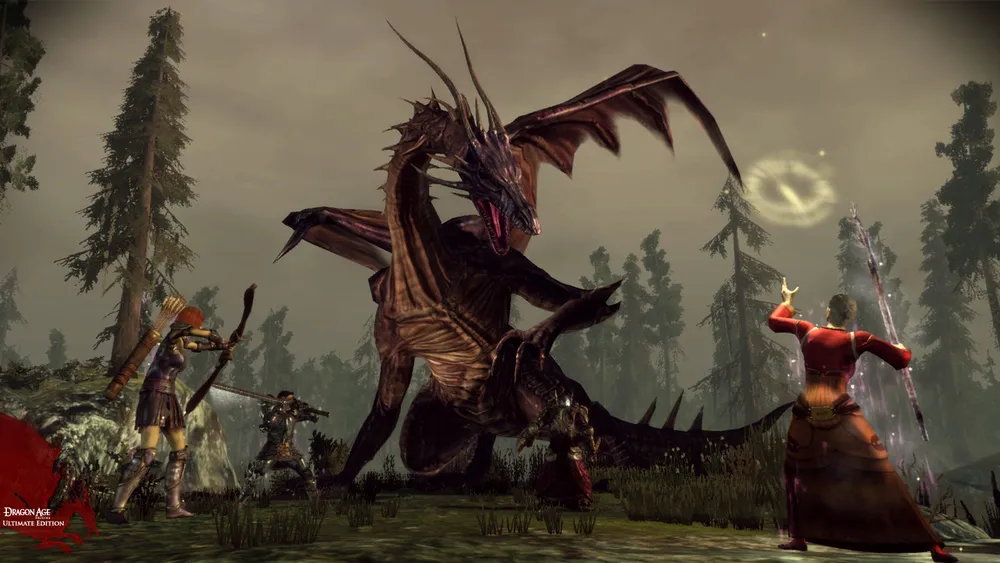
Former Dragon Age executive producer Mark Darrah described that gap while discussing the possibility of a trilogy remaster. As VGC reports, Origins used Eclipse, an enhanced branch of BioWare's Aurora technology, while Dragon Age 2 moved to Lycium. Darrah's blunt assessment is that almost nobody remains at or outside BioWare with the necessary Aurora knowledge.
That does not make a remaster impossible. It changes the project from restoration into software archaeology. A team would need to reconstruct build pipelines, identify assumptions that were never documented, replace dependencies, and decide which strange behavior is a bug versus a load-bearing quirk. Before improving a texture or interface, it would have to make the old production environment intelligible.
Source code is not institutional memory
Large games are full of decisions that never reach a design document. A tool may need steps performed in a precise order. A compiler warning may be harmless only under one configuration. An animation system may depend on a workaround known by three people who stopped writing it down because everyone nearby already understood. Years later, the code remains and the context has vanished.
Studios often treat that knowledge as an employee attribute rather than a company asset. Documentation is postponed because shipping is urgent. Maintenance teams shrink because the next production needs staff. Contractors leave with no structured handoff. Layoffs remove people according to current budgets without measuring the historical systems that only they can explain. The savings appear immediately; the cost waits until someone proposes a remaster.
The cost is not limited to rereleases. Old tools contain solutions to narrative branching, save migration, dialogue staging, and content validation that a new project may need to rediscover. When experienced staff leave without succession, the next team loses both the ability to maintain the past and evidence about why earlier production choices succeeded. Institutional amnesia makes innovation more expensive because every generation starts by relearning avoidable lessons.
Credits alone cannot map that knowledge. A public list shows who worked on a game, not who understands a particular exporter or why a quest database fails under one condition. Studios need internal ownership records that connect systems to several maintainers, record major decisions, and schedule handoffs before departures. No critical pipeline should depend on one person's memory, however talented that person is.
Dragon Age is especially revealing because its first three games do not share one convenient technical foundation. Mass Effect's trilogy could be approached as a more unified Unreal Engine project. Dragon Age crossed proprietary engine generations before Inquisition moved to Frostbite. A collection would not be one restoration repeated three times. It would be three different negotiations with old technology.
Preservation has to begin before a game is old
The obvious answer is better documentation, but a shelf of documents is not enough. Studios need reproducible builds, archived tools, dependency snapshots, test suites, and regular exercises in which someone outside the original team proves the project can still be assembled. Museums do not preserve a machine by photographing it once. They preserve parts, procedures, provenance, and the skills required to operate it safely.
- A clean-machine build that can be repeated without the original developer's workstation.
- Archived tools and dependency versions with clear ownership records.
- Rights documentation for music, middleware, performances, and regional releases.
- Scheduled handoffs that prove another maintainer can operate the pipeline.
Reproducibility should be treated as part of shipping. A clean machine should be able to assemble the final build from archived dependencies, and the result should be checked after major infrastructure migrations. Proprietary services need emulated or documented fallbacks. Legal records for licensed music, middleware, and performances should sit beside the code, because a technically functioning remaster can still be blocked by rights nobody prepared to renew.
There is a counterargument: maintaining every old pipeline is expensive, and production technology must move forward. True. No studio can keep every workstation and specialist indefinitely. But preservation does not require freezing an organization. It requires planning the exit from a system instead of discovering years later that the exit took the map with it.
The practical compromise is triage. A publisher can identify culturally and commercially important projects, capture their environments while the teams still exist, and fund a small central group that specializes in migration. That is cheaper than keeping every engine alive and far more responsible than waiting for nostalgia to justify emergency archaeology. Preservation budgets should begin when a game ships, not when a remaster appears on a forecast.
For developers, this is also a labor issue. Knowledge transfer requires time that schedules must recognize, and experienced workers should not be treated as interchangeable costs until the day their expertise becomes urgently valuable. A studio protects history by retaining people, mentoring successors, and crediting maintenance work that rarely produces a trailer.
A Dragon Age remaster may still happen through emulation, replacement technology, or a new team willing to do the archaeology. The warning already stands. Creative history is carried by people as much as repositories, and a company that repeatedly sheds experienced staff can become a stranger to its own catalog. By the time players ask where an old game went, the first disappearance may have happened years earlier, inside the building that made it.

Related posts

Blue Prince Makes a House Feel Like a Question
Blue Prince turns a changing floor plan into a puzzle about memory, evidence, and deliberate uncertainty. Its rooms matter because discovery is legible without being handed over.

Like a Dragon: Infinite Wealth Makes Side Stories Matter
Like a Dragon: Infinite Wealth understands that optional stories are not spare content. They give an RPG a second language for character, comedy, and place that the main plot cannot always use.
Steam Deck Verified Is Useful Only When It Explains the Compromise
Steam Deck Verified is valuable when it explains controls, display, launchers, and system support. A green checkmark should start a purchase decision, not substitute for it.
Silent Hill 2 Remake Works Best When It Leaves You Uneasy
Silent Hill 2's remake has room to modernize its presentation, but its psychological horror works only when new technology sharpens uncertainty instead of explaining the town away.