
MECCHA CHAMELEON Shows Why a Six-Dollar Party Game Can Travel Fast
MECCHA CHAMELEON launched on June 9, 2026, and its developer announced five million sales on June 18. The dates make the headline figure unusually easy to check rather than merely repeat: the Steam launch post and five-million update are both public. The game has a premise that can be understood from a single clip. Hiders paint their white bodies to imitate the scenery, while Seekers try to expose them before time runs out. That immediate visual joke is the more interesting story than the number alone.
It also belongs to a recognizable family of inexpensive social games whose rules are legible to players and spectators at the same time. That does not prove streamers caused the sales, and the size of the development team is not established by the storefront name alone. What the design does prove is that a round creates readable reactions: a disguise either fools the room or collapses in public. The game generates stories without requiring an audience to learn a competitive rulebook first.
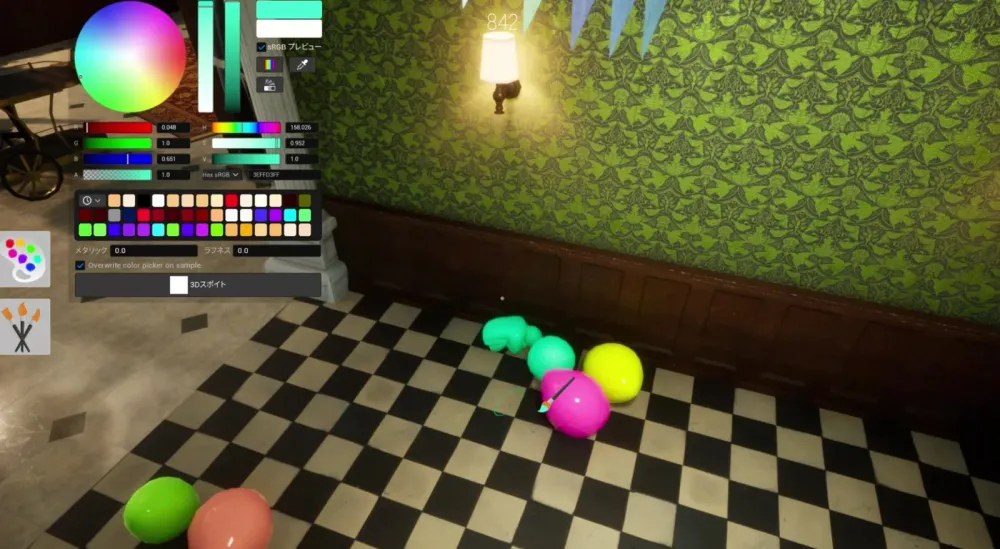
Why this formula keeps working
Part of the appeal is how low the barrier appears. The official Steam page listed the game at $5.99 when this article was updated, recommends two to ten players, supports public and private matchmaking, and explicitly advertises streaming support. Its listed PC requirements are modest. None of that guarantees a good session, but it shortens the distance between seeing the joke and trying it with friends.
There's an honesty to it that bigger releases struggle to match. Nobody is buying MECCHA CHAMELEON for a 60-hour campaign or a battle pass. They're buying six dollars of dumb fun for a night with friends, and the game delivers exactly that. The whole value proposition is transparent, and it spreads precisely because it's transparent.
The catch: hype games burn bright and fade fast
Here's the flip side, and it's the part nobody likes to say out loud while the numbers are still climbing. The same things that make these games explode (simplicity, a small team, a tiny budget) also tend to mean there isn't much content underneath the hook. The novelty is the product, and novelty has a shelf life. The hype cools, everyone drifts off, and we all start waiting around for the next one. The clearest example of the whole pattern is still Among Us, which completely took over the internet during the pandemic and turned a years-old game into a global phenomenon overnight. It still has players today, plenty of them, but it is no longer the center of the universe. A long line of hype games has come and gone since, each one having its moment and then quietly handing the crown to the next.
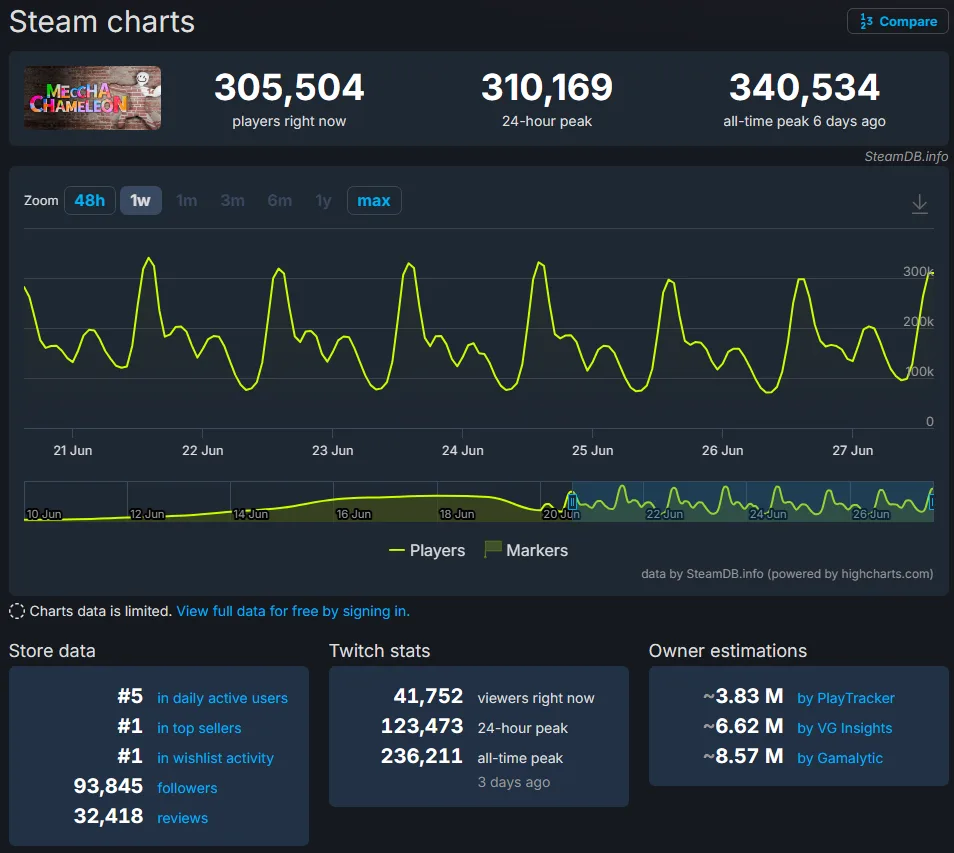
A launch chart is a snapshot, not a prophecy. The five-million milestone was quickly followed by an official seven-million update, which shows that the opening momentum continued. Whether that audience stays is a different question that can only be answered with dated comparisons over time. Treating every viral release as destined to vanish is as careless as treating every launch spike as the birth of the next permanent platform.
Why the big studios stay away
The safer conclusion is not that major publishers never make social games, or that a short life is inevitable. It is that MECCHA CHAMELEON sells a bounded proposition. Six dollars buys a visual hide-and-seek toy for a group, not a promise that one game will become a decade-long hobby. That clarity can be more persuasive than a roadmap full of distant systems.
The dismissive label sometimes attached to these releases, "friendslop," says more about the critic than the product. A game does not have to occupy hundreds of hours to justify itself. One memorable evening can be the intended unit of value, especially when the asking price is transparent.
That is the useful lesson in MECCHA CHAMELEON's opening. The game makes its joke, group size, price, and participation model obvious before the purchase. Five million sales do not prove a universal formula, and seven million do not settle the retention question. They do show that a small, legible idea can compete for attention without pretending to be an endless destination. For an industry prone to confusing duration with value, that is worth noticing.

Related posts

Indiana Jones and the Great Circle Understands Adventure Needs Quiet Spaces
An analytical look at how first-person exploration, puzzles, and improvised tools can turn familiar mechanics into choices players can understand and remember.
Split Fiction Shows Co-Op Works When Players Need Different Things
An analytical look at how two writers, split abilities, and asymmetric co-op can turn familiar mechanics into choices players can understand and remember.
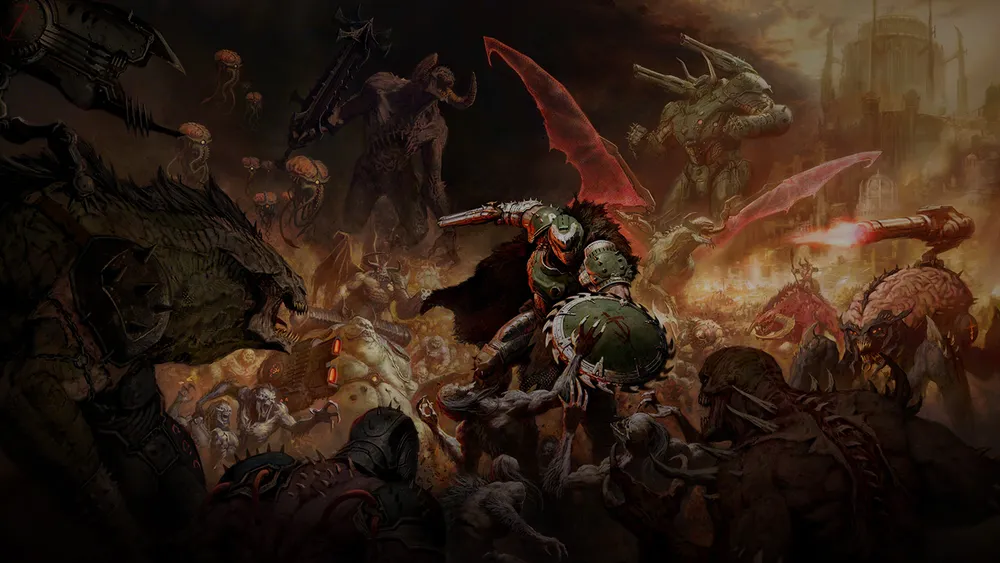
DOOM: The Dark Ages Makes a Power Fantasy Stronger With Limits
An analytical look at how the Slayer Shield, parries, and deliberate aggression can turn familiar mechanics into choices players can understand and remember.
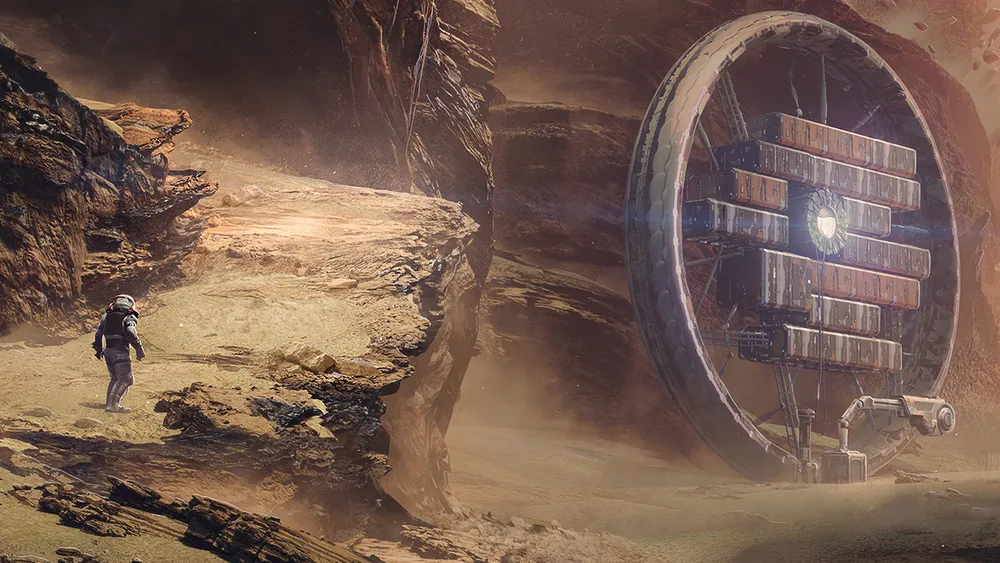
The Alters Knows Survival Games Need a Human Cost
An analytical look at how survival, a mobile base, and alternate versions of Jan can turn familiar mechanics into choices players can understand and remember.