
No Man's Sky Updates Work When They Change a Place
An exploration game can add features forever and still make its universe feel smaller. Another resource, another recipe, and another reward track may occupy more hours without giving a player a reason to remember where those hours happened. No Man's Sky has always had to solve that problem at a ridiculous scale. Its universe is the pitch, so an update cannot only be a spreadsheet of new things. It has to alter the feeling of arriving somewhere unknown and deciding whether to stay.
Hello Games describes Worlds Part II as an update with new stars, planets, terrain, water rendering, lighting, stories, and expeditions. The page also details purple-class systems, ocean life, taller waves, moon water, and faster loading. That is an intentionally mixed list of technology, geography, and activities. Its value is not that any individual bullet is huge. It is that the bullets can make a planet behave like a place instead of a background for extracting another material.
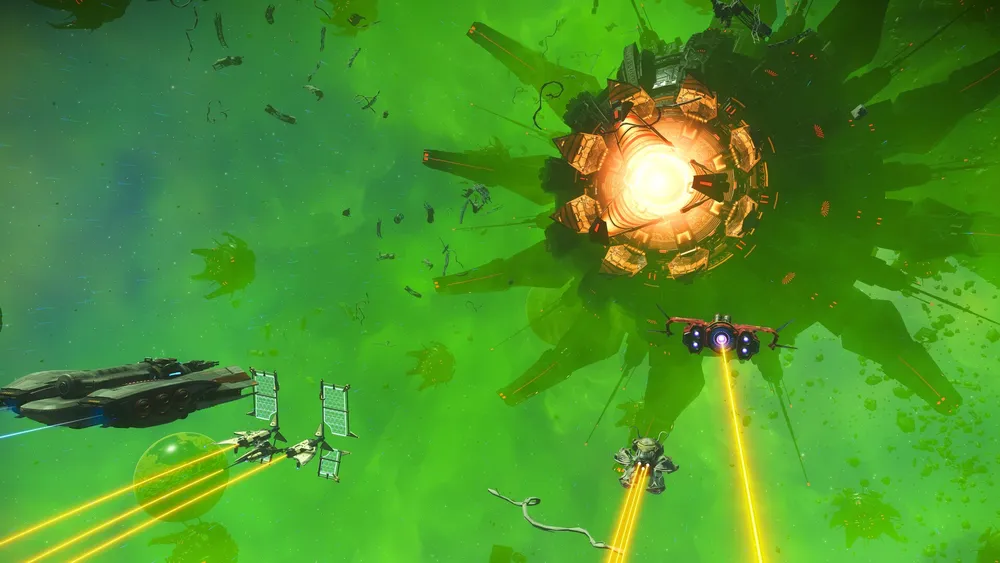
A location needs more than a destination marker
The best discovery stories are physical. A low storm ceiling changes a route. A strange coast makes someone land early. A dangerous ocean makes a short trip feel like an expedition rather than a loading screen between icons. Those moments cannot be supplied by a quest list alone. They depend on terrain, visibility, sound, movement, and enough uncertainty that the player does not already know what lies beyond the next ridge.
That is why visual and performance work deserves a place in an update headline. The Worlds Part II notes say that compression reduces the game size and can improve loads and transitions. A faster transition is not just a technical brag. In a game about leaving atmosphere, crossing space, and landing somewhere new, friction changes rhythm. Less waiting can make the decision to investigate one more world feel plausible, while better water and lighting can make that world hold a clearer identity afterward.
New systems should deepen the same journey
There is still a risk in this approach. When an update contains expeditions, storage improvements, fishing missions, new stars, and new biomes, players can see it as a pile of separate errands. The solution is not to remove activities. It is to connect them to the same act of attention. If fishing reveals the character of a coast, if a new star class changes the route through space, and if storage frees a player to keep a memorable ship, the systems reinforce a traveler’s story instead of competing for their attention.
No Man's Sky also has to be careful with procedural novelty. A world can be technically different and emotionally interchangeable if every discovery has the same reward cadence. Hand-authored missions, visual landmarks, and strong environmental behaviors can give generated terrain an anchor. The player does not need every planet to be permanent. They need enough reasons for one unusual planet to become the one they tell friends about later.
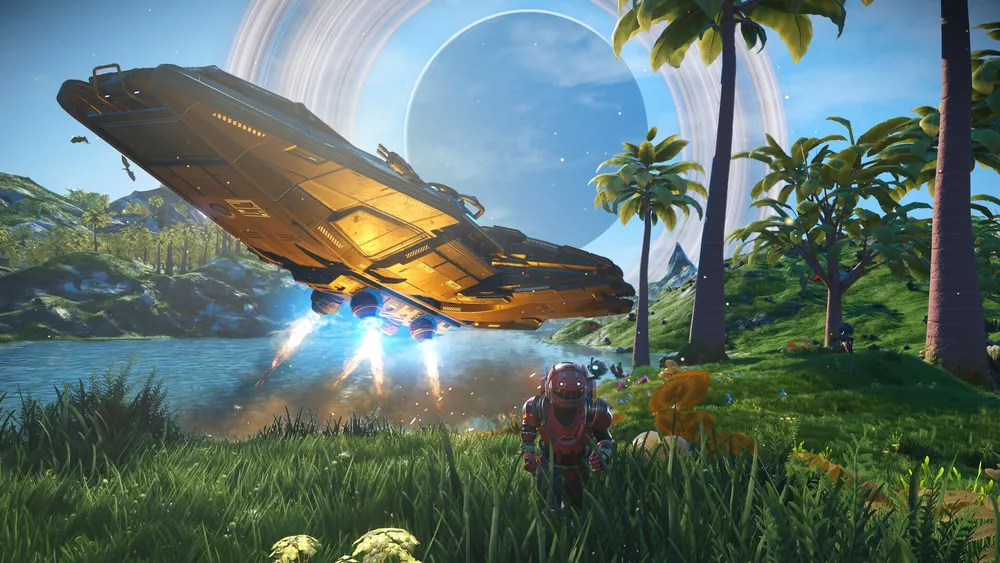
Expansion works sideways
The lasting appeal of a huge universe is not that it keeps getting wider on a map. It is that its existing space gains new ways to be read. Worlds Part II points in that direction by putting system-level upgrades next to environmental ones. An expedition is easier to care about when it sends players through a changed world, not when it merely hands them a timer and a reward.
That makes for a better standard than raw update size. Did the patch make a familiar planet feel newly dangerous, calm, beautiful, or worth crossing? Did it give a player a reason to look up from the inventory? If the answer is yes, an exploration game has expanded in the way that counts. It has not just added more universe. It has made more of the universe feel like a place.

Related posts

The Alters Knows Survival Games Need a Human Cost
An analytical look at how survival, a mobile base, and alternate versions of Jan can turn familiar mechanics into choices players can understand and remember.
Project Zomboid Build 42 Is Finally Stable After 19 Months
Project Zomboid Build 42.20.0 reached the stable branch on July 29 after roughly 19 months in Unstable. The promised late-game work matters even more than the label.
Valheim 1.0 Made Me Replay It. Then Mistlands Happened
Valheim is finally leaving early access with version 1.0 and Steam achievements, so I started a fresh solo run to get ready for launch with friends. Fifteen fog-blind hours in Mistlands later, I have complaints about how this game treats effort.
Split Fiction Shows Co-Op Works When Players Need Different Things
An analytical look at how two writers, split abilities, and asymmetric co-op can turn familiar mechanics into choices players can understand and remember.