
Beast of Reincarnation Is the Reinvention Game Freak Needed
Success can narrow the way a studio is seen. Game Freak has made games outside Pokémon for decades, but the scale of that franchise turns almost every other project into a footnote or a comparison. A new creature becomes almost a Pokémon. A visual limitation becomes evidence about Pokémon. Even experiments are framed as vacations from the work the studio is assumed to exist to perform. Beast of Reincarnation is exciting because it appears determined to break that sentence structure.
The official Steam page presents a post-apocalyptic action RPG built around Emma and her canine companion Koo. Its combat mixes real-time action with command-based decisions, while its overgrown future and human-animal partnership create a tone far removed from collectible mascots and bright competitive systems. The departure is not valuable merely because it looks darker. It gives the studio a problem that cannot be solved by repeating its most famous habits.
This player is hosted by YouTube. Loading it permits a connection to an external provider.
That matters for Game Freak as an institution. A team repeatedly responsible for one enormous series accumulates expertise, but that expertise can become trapped inside a rigid production cycle. Release expectations define timelines. Brand rules shape visual choices. Platform priorities set technical limits. A separate project creates a place where designers can test whether their instincts still work when collection, type matchups, and an inherited world are no longer carrying the structure.
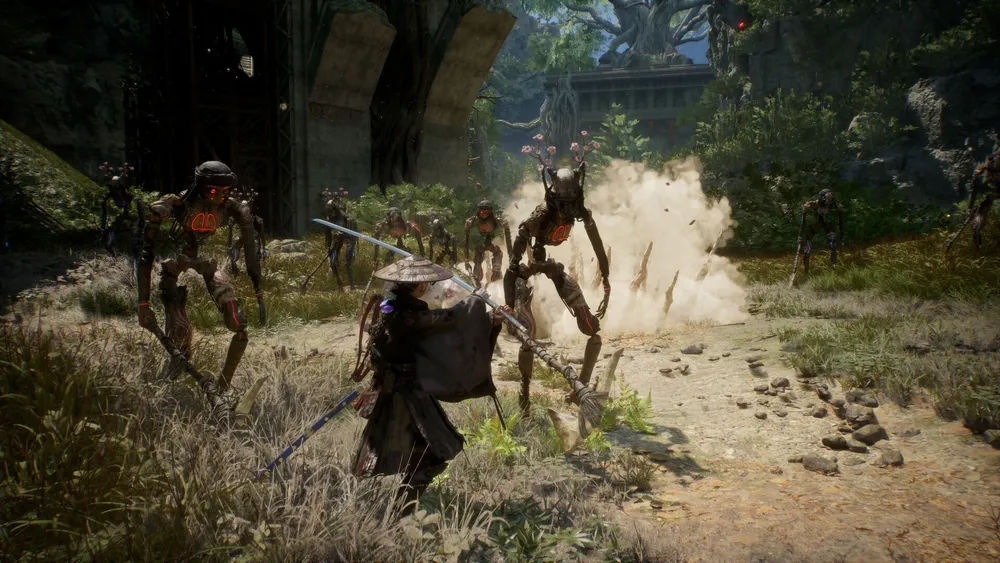
A new genre changes the questions
Action combat forces immediate attention onto animation, responsiveness, enemy telegraphs, camera behavior, and the space between attacks. Command elements introduce a second rhythm: the player must decide not only how to execute but when to pause, assess, or direct a partner. None of those challenges is alien to Game Freak, yet combining them at this scale asks the studio to express itself through a different physical language.
Koo may be the most revealing bridge. Game Freak has extraordinary experience making players care about creatures, reading personality through silhouette and movement, and building rules around companionship. Beast of Reincarnation can carry that knowledge forward without turning the dog into another unit in a collection. One persistent partner allows the relationship to develop through behavior, dependency, and shared danger rather than acquisition.
The setting also opens another muscle. An overgrown post-apocalypse needs environmental storytelling and a sustained mood rather than a sequence of towns designed to reset the adventure. Ruins, vegetation, weather, and traversal must explain what happened without interrupting the journey for exposition. If the studio succeeds, the achievement will belong to skills that Pokémon's structure has rarely allowed it to display so prominently.
Difference alone is not reinvention
There is a risk in treating any serious-looking action RPG as proof of artistic maturity. Muted colors, ruined landscapes, and difficult melee combat have become their own familiar template. A studio can escape one shadow only to disappear into another. Beast of Reincarnation needs a mechanical and emotional identity beyond being the surprising game from the Pokémon developer.
The real test is whether its hybrid combat creates decisions unavailable in a conventional character-action game, and whether Emma and Koo's partnership shapes exploration rather than only the story. If commands merely trigger companion abilities on cooldown, the genre mixture will feel cosmetic. If the world offers familiar corridors between cinematic fights, the beautiful premise will have changed the surface more than the studio's process.
- Does directing Koo change timing and positioning rather than only add damage?
- Does the partnership alter exploration as well as combat?
- Does the world sustain readable performance when vegetation and effects become dense?
Technical performance will also matter. Game Freak's recent reputation has been shaped by criticism of ambitious releases that struggled to present their worlds smoothly. A separate project cannot solve every production problem, but it can show what different technology, scope, publishing support, and scheduling make possible. Reinvention has to be visible in reliability as well as art direction.
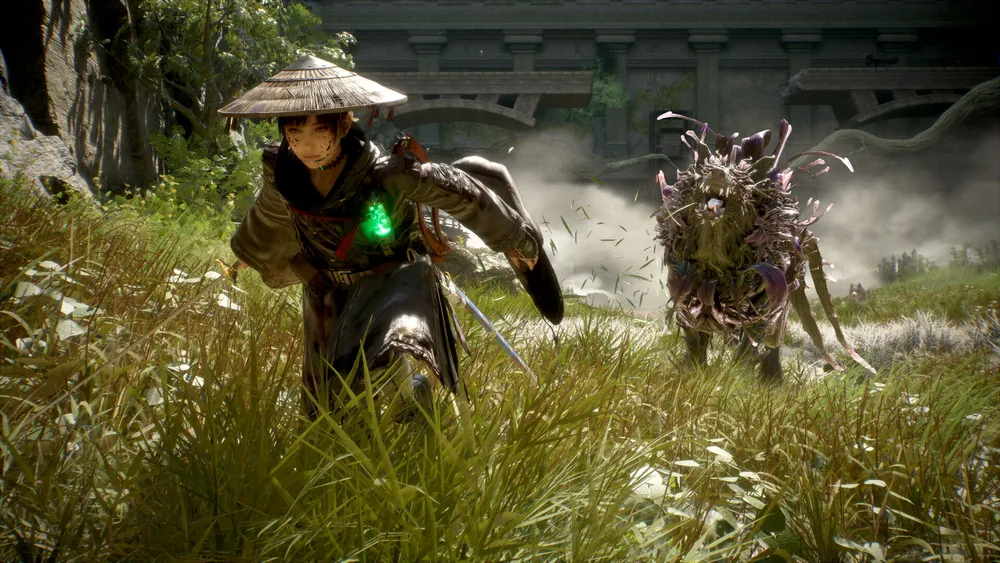
Studios need room to become plural
For players, a successful Beast of Reincarnation would provide more than one promising RPG. It would make the Game Freak name less predictive. That uncertainty is healthy. Studios with multiple creative identities can surprise an audience, move talent between kinds of work, and retain developers who do not want their entire careers defined by one production line.
There is a business advantage too. Depending on a single property, even an extraordinarily durable one, concentrates risk and encourages increasingly cautious decisions. A new series does not need to approach Pokémon's scale to be useful. It can create a smaller audience, establish reusable technology, and prove that the studio can launch work whose value is not borrowed from an existing brand.
The project can also change how talent moves inside the studio. Artists and engineers who develop tools for larger environments, cinematic action, or a persistent companion can carry those lessons into later work without copying Beast's surface. Knowledge flowing between different productions is healthier than a single team relearning the same constrained pipeline under an immovable schedule.
Beast of Reincarnation should not be burdened with fixing every complaint attached to Game Freak. It deserves to be judged as its own game. That is precisely why it represents the reinvention the studio needed. The project creates enough distance for familiar strengths to look new and enough pressure for hidden weaknesses to become impossible to ignore. Reinvention is not abandoning the past. It is discovering that the past was never the full range of what the studio could be.

Related posts

The Blood of Dawnwalker Is Right to Put the Game Before the Sales Target
Rebel Wolves says sales are secondary to making the RPG it believes in. That creative priority is healthy, provided ambition is matched by disciplined scope and honest production.

Rise of the Ronin Shows the Best Thing a Subscription Can Do
Subscription catalogs are at their best when they create a second launch for a game that was easy to overlook. Rise of the Ronin is a better argument for PS Plus than another day-one content race.
Spirit Vale's Early Access Launch Buckled Under Its First Crowd
Spirit Vale's July 15 Early Access launch drew a surge of negative Steam reviews as servers, portals, waypoints, and skills failed. Its rapid hotfixes now matter more than the launch label.
Cyberpunk 2077's 40 Million Comeback and Its Soulless Night City
Cyberpunk 2077 just crossed 40 million copies sold and CD Projekt is celebrating a historic comeback. As a betrayed 2020 preorder buyer, I'm floored by the ray tracing and still unconvinced Night City ever got a soul.