
PlayStation Without Discs Is a Worse Deal for Everyone
Physical games are inefficient in almost every way a platform holder measures efficiency. They need manufacturing, freight, shelf space, retailer margins, and hardware that can read them. They can be resold without generating another payment. Friends can lend them. Shops can cut the price without asking the console maker. From the owner of a closed digital store, every one of those qualities looks like friction. From the player's side, they are competition and control.
That is why the report that Sony intends to stop producing physical releases for new PlayStation games in 2028 matters beyond collectors. MP1st's coverage describes the plan and the resulting player campaign, including a proposed August blackout. Sony has not provided a public technical case on the linked page, so the precise implementation still deserves scrutiny. The direction alone is enough to examine.
Digital delivery is not the villain here. It is faster, quieter, accessible from home, and often the only practical route for smaller releases. The problem begins when convenience becomes the only authorized route. A disc option keeps the digital store honest even for people who rarely buy discs. It creates another price, another seller, another backup, and another way to transfer value after the first purchase.
The missing competition
On a disc-capable console, a new game can be sold by the platform store, a supermarket, an independent shop, an online retailer, or another player months later. Those channels compete on price and availability. In a digital-only system, Sony is the storefront, payment processor, gatekeeper, and landlord. Publishers may choose discounts, but the player cannot take the same license to a competing shop that offers a better price.
Resale is not merely a way to recover money. It is how one purchase funds the next, how late adopters try expensive games, and how discontinued titles continue circulating after marketing ends. Lending does similar work without a transaction. These behaviors turn a copy into an object with a social life. A digital license may be easier to download, but it usually cannot leave the account that bought it.
Gifts and inheritance expose the same difference. A boxed library can move between siblings, be donated, or survive its original owner's account. Digital purchases are usually governed by nontransferable terms even when families have paid thousands over a generation. As libraries grow, the absence of clear transfer rules stops being a theoretical concern and becomes a question about whether a valuable collection can outlive one login.
Retail competition also affects access outside wealthy, well-connected markets. Discs can be imported, traded locally, bought with cash, or installed without downloading an entire modern game. None of those routes is frictionless, but removing them assumes stable broadband, supported payment methods, and favorable regional pricing. A global platform should not define convenience only from the perspective of its easiest customer.
The strongest argument for ending discs is that consumer behavior is already moving away from them. That may be true in aggregate, but a popular choice does not make every alternative worthless. Headphone jacks, removable storage, and local saves were also used less once companies designed around their absence. Adoption can reflect convenience while still hiding the cost of losing an option.
A disc is not perfect preservation
Physical media should not be romanticized. Many discs ship with incomplete builds, rely on patches, or contain little more than an installer. Online authentication can still block a boxed game. Discs degrade, drives fail, and preservation requires more than a plastic case. Keeping physical production does not solve the industry's access problem by itself.
Nor does every retailer represent healthy competition. Limited print runs can invite speculation, used prices can exceed digital ones, and physical manufacturing has environmental and logistical costs. Sony has legitimate reasons to simplify hardware and distribution. The problem is treating those corporate savings as if they automatically become player value. Removing a feature should be matched by rights that replace its functions, not just a slimmer supply chain.
Those replacements are imaginable. Digital licenses could be resold through an open marketplace, temporarily lent to friends, transferred between approved stores, or passed to an heir. Regulators and platform holders could require long offline authorization and a shutdown plan. Until those protections exist, a disc drive remains an inelegant but effective piece of consumer leverage.

The transition should therefore be judged by capability, not sales percentage. Even if most purchases are digital, the remaining physical option constrains pricing and provides failure paths that benefit the entire market. A minority use can create majority leverage. Sony should have to demonstrate which equivalent rights replace that leverage before declaring the old format obsolete.
It does preserve leverage. A complete build on a disc can work when a storefront is unavailable. A used copy can surface after delisting. A retailer can clear inventory below the platform's preferred price. None of those guarantees permanence, but each one prevents a single company from controlling every path between a game and its audience.
Sony may decide that the savings outweigh the backlash, and many players may never miss the drive. The deal is still worse. A digital future worth accepting would need stronger license portability, offline guarantees, inheritance rules, and meaningful store competition to replace what disappears. Removing the disc first and promising that access will work itself out later is not progress. It is dependence with cleaner packaging.

Related posts

Miyamoto Is Right: Console Specs Stopped Being the Whole Argument
Hardware power still matters, but raw specifications no longer explain why people choose one console over another. Identity now comes from the complete experience around the chip.
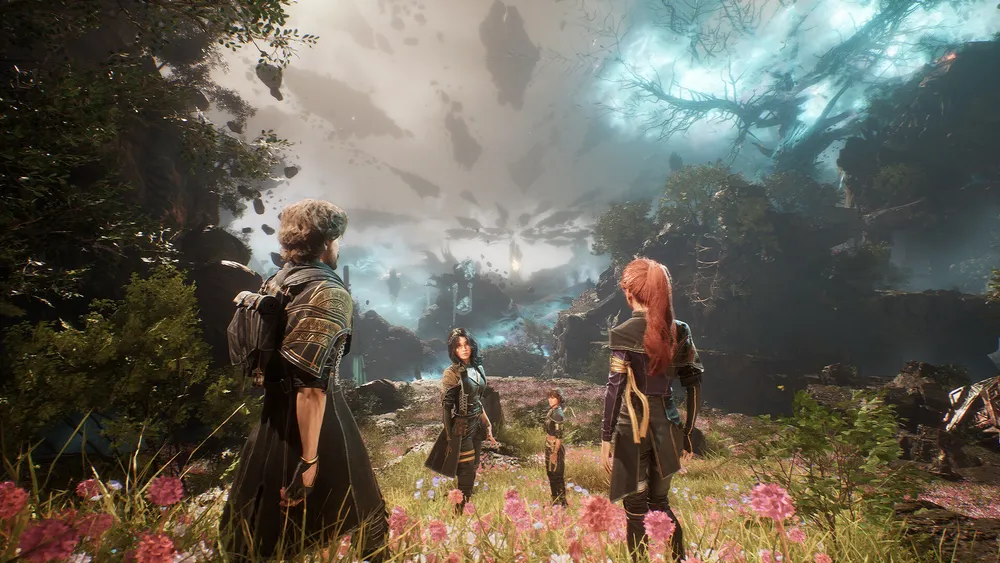
Clair Obscur Should Come to Switch 2 Only If It Survives the Trip
A Switch 2 port of Clair Obscur would widen the audience, but availability is not valuable when performance, visual direction, or a small studio's next project pays the full cost.
A $339 RTX 3060 Listing Appeared Again, and the Value Is Hard to Defend
A Gigabyte RTX 3060 12GB appeared at Newegg for $339.99. That retail listing is real, but it is not proof that Nvidia has formally relaunched the card.

GTA VI Pre-Order Price Signals a Costlier Future for Gamers
Grand Theft Auto VI is up for pre-order at $79.99, with a $99.99 Ultimate Edition, and that number may matter more than the November 19 launch. Here is why the new $80 normal threatens to turn gaming into a luxury.