
Crazy Taxi Can Become Multiplayer Without Becoming Generic
Turning an old arcade game into online multiplayer usually triggers the same fear: a direct, self-contained idea will return as a platform full of currencies, seasons, and waiting rooms. Crazy Taxi has more protection against that fate than most revivals. Its original loop was already social even when only one person held the controller. A run was a public performance measured in bad turns, impossible shortcuts, and a timer everyone in the room understood.
Crazy Taxi: World Tour's announced modes extend that energy rather than replacing it. VGC's report describes a September closed test with up to six players, two maps, six cars, and four characters. Pickup Race asks drivers to earn more money by completing fares, while Cops 'n' Cabbies divides them into competing teams.
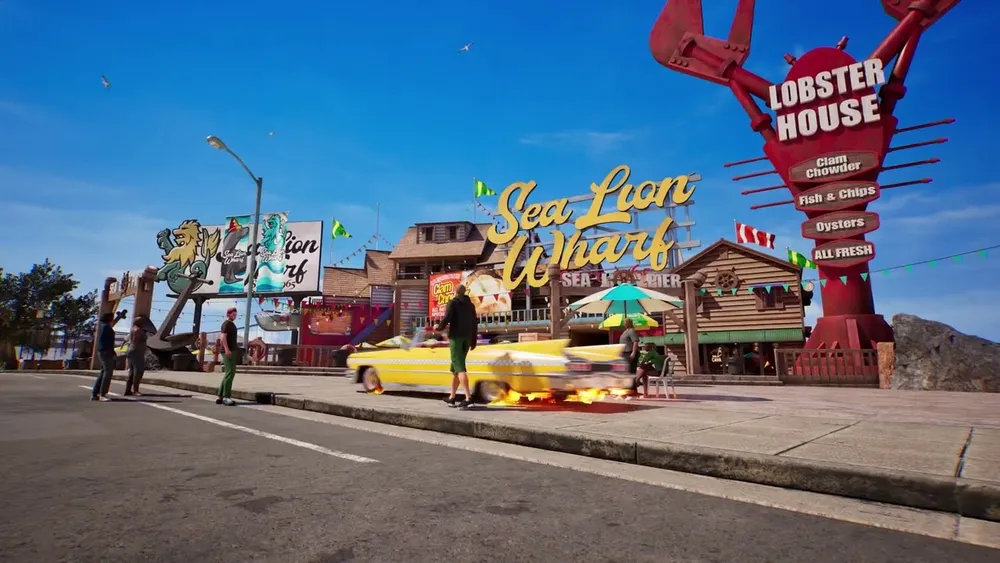
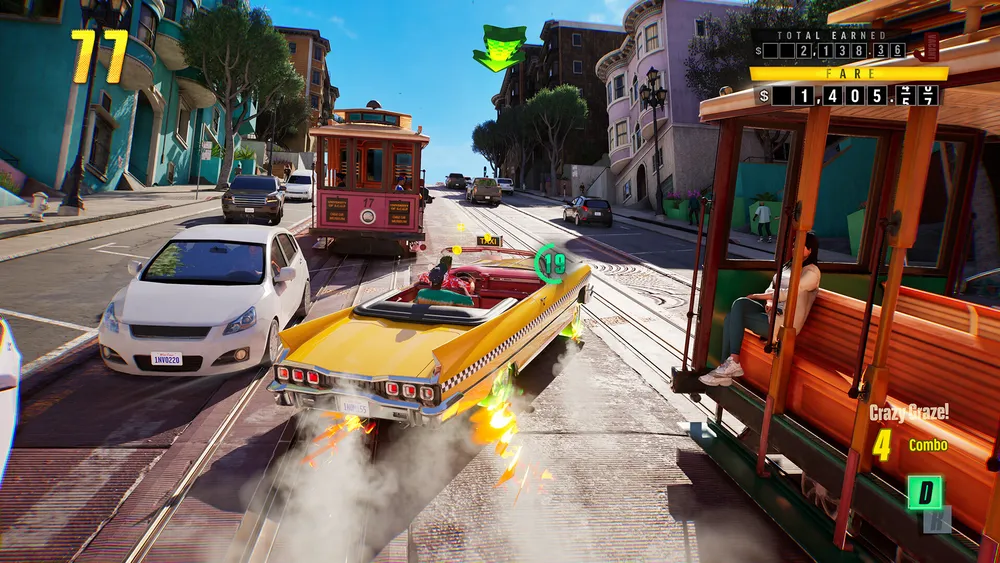
Those formats fit because Crazy Taxi was never about driving a perfect line in isolation. Traffic, hills, pedestrians, and destination placement turn every fare into a negotiation with chaos. Other human drivers can become another moving obstacle, but also another source of readable comedy. The important design choice is keeping everyone focused on the street instead of the scaffolding around it.
Multiplayer should increase the improvisation
A good Pickup Race does not need elaborate combat. The tension already exists when two taxis identify the same valuable passenger, choose different shortcuts, and collide at the worst possible corner. The map becomes a shared economy of routes. Players learn where fares appear, where a risky jump saves time, and when following a leader is smarter than inventing a path.
Scoring has to keep that improvisation visible. If only final earnings matter, early mistakes may decide a match long before it ends and encourage losing players to quit. Short rounds, comeback opportunities, visible fare values, and bonuses for dangerous driving can keep everyone reading the street. The score should reward expressive risk without making random collisions more valuable than learning a route.
Track design must support conflict without becoming a closed racing circuit. Crazy Taxi needs destinations distributed across a city, routes with competing advantages, and traffic that creates stories rather than a single optimal line. Multiplayer can make familiar streets deeper if other drivers change the calculation. It becomes generic when the city is reduced to checkpoints arranged for balance.
Team play can expose another side of the same systems. Cops 'n' Cabbies sounds strongest when the roles remain asymmetric and simple: one side creates pressure, the other turns navigation into escape. The game does not need every car to carry abilities, cooldowns, and character classes. Crazy Taxi's identity lives in acceleration, traffic, terrain, and a city that invites irresponsible interpretation.
Network tests are useful precisely because this kind of design can fail in unglamorous ways. Latency changes how collisions feel. Six drivers can make a readable intersection become random noise. A dominant route can turn an expressive map into a solved lap. Sega's official test page frames the session around online stability, but the behavioral data may matter just as much as the server graph.
The live-service trap is avoidable
World Tour will need progression and reasons for an online audience to return. That does not require turning every return into a chore. Cars, cosmetic expression, additional maps, and rotating rule sets can provide variety without making players complete a weekly checklist before they are allowed to have fun. An arcade game should respect the person who arrives for 20 loud minutes and leaves satisfied.
Monetization will reveal whether Sega understands that promise. Cosmetic taxis and drivers can support continued development if the base roster feels complete and purchases do not alter performance. Paid maps or rule sets would split matchmaking, while time-limited rewards would turn a game about speed into a calendar obligation. An arcade revival should sell more fun, not relief from missing out.
Music is part of the same identity problem. Crazy Taxi's original soundtrack did not merely accompany driving; its speed and attitude gave reckless movement a cultural context. Licensing may make literal restoration difficult, but World Tour needs a musical direction just as assertive. A safe playlist would make even excellent handling feel less like Crazy Taxi.
Single-player also remains essential. VGC notes that the network test excludes it, not that the final game will. A strong solo mode gives World Tour an identity beyond population health and preserves the basic pleasure when servers are quiet. Multiplayer should be an expansion of Crazy Taxi's performance, not the condition that makes the game function.
Local play would strengthen that bridge. Split-screen or quick pass-the-controller challenges preserve the series' public-performance roots and give the game a life outside server population. Online infrastructure eventually closes. A score attack that remains legible to people on the same couch can survive every roadmap.
The revival does not have to choose between authenticity and online play. Crazy Taxi was always competitive, theatrical, and built for repetition. Put multiple drivers in the same city and those qualities can become clearer. The generic version would bury them beneath service mechanics imported from somewhere else. The right version trusts a yellow cab, a bad shortcut, and five other people to create enough trouble on their own.

Related posts


Blue Prince Makes a House Feel Like a Question
Blue Prince turns a changing floor plan into a puzzle about memory, evidence, and deliberate uncertainty. Its rooms matter because discovery is legible without being handed over.

Like a Dragon: Infinite Wealth Makes Side Stories Matter
Like a Dragon: Infinite Wealth understands that optional stories are not spare content. They give an RPG a second language for character, comedy, and place that the main plot cannot always use.
Steam Deck Verified Is Useful Only When It Explains the Compromise
Steam Deck Verified is valuable when it explains controls, display, launchers, and system support. A green checkmark should start a purchase decision, not substitute for it.
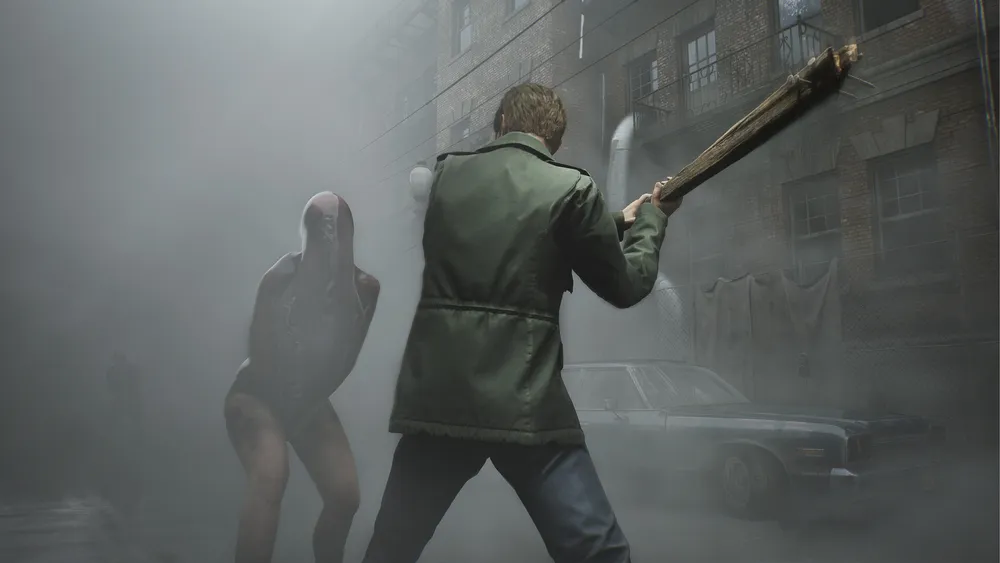
Silent Hill 2 Remake Works Best When It Leaves You Uneasy
Silent Hill 2's remake has room to modernize its presentation, but its psychological horror works only when new technology sharpens uncertainty instead of explaining the town away.