
Big Walk Understands That Co-Op Does Not Need a Quest Log
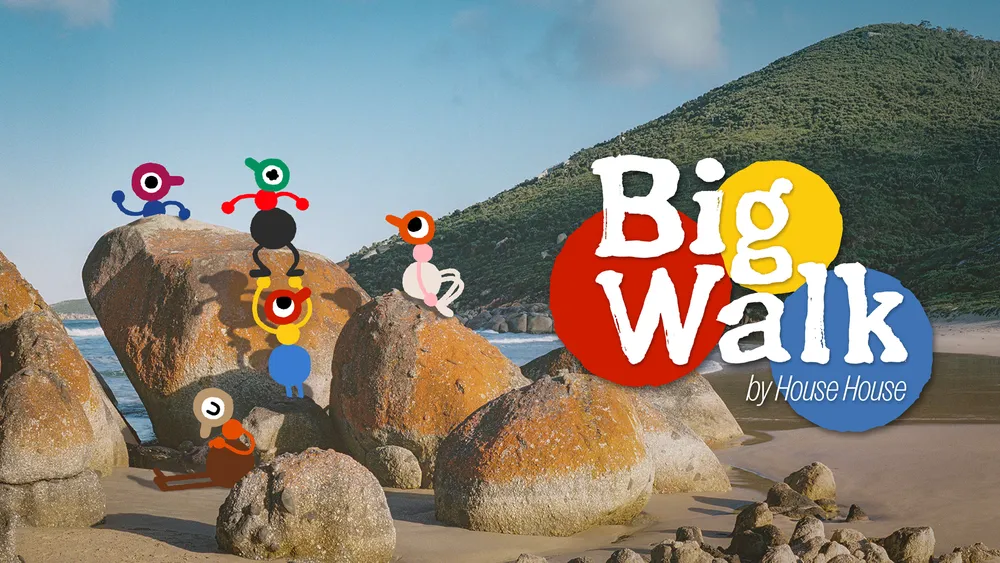
Many co-op games treat friendship as labor optimization. Four players enter the same space so objectives can be cleared faster, roles can be distributed, and rewards can be collected with less friction. Conversation survives in the gaps, but the game keeps asking everyone to move toward the same marker. Big Walk proposes the reverse. The walking, talking, getting distracted, and briefly losing one another appear to be the activity rather than delays between activities.
House House describes it in the official FAQ as a cooperative multiplayer game about hanging out and getting lost with close friends. The premise includes exploration, communication, and a strange island instead of a traditional campaign defined by quests. Coming from the studio behind Untitled Goose Game and published by Panic, it looks less interested in giving a group a job than in giving it a place.
This player is hosted by YouTube. Loading it permits a connection to an external provider.
That distinction addresses a problem modern multiplayer design rarely names. Friends do not always need a challenge calibrated to their combined skill. Sometimes they need enough structure to avoid staring at a lobby and enough empty space to continue a conversation. A quest log can help people coordinate, but it can also turn limited time together into a meeting agenda. Every tangent starts to feel inefficient.
Unstructured time still needs design
The magic of social play often occurs between formal goals: someone misreads a map, tests a ridiculous interaction, or walks in the opposite direction while everyone else argues about where they went. Those events feel spontaneous, but games can either support or suppress them. Fast timers, constant combat, shared failure states, and dense reward tracks punish distraction. Legible landmarks, forgiving movement, expressive gestures, and local curiosities give it room.
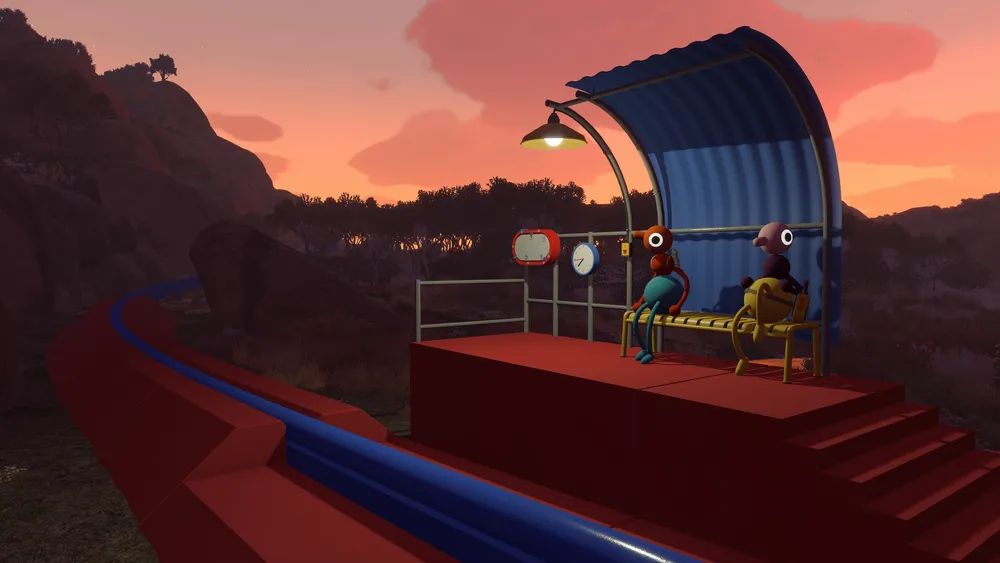
Communication mechanics are especially important. A conventional voice channel transmits words but does not necessarily make conversation part of the world. Distance, visibility, gestures, and spatial sound can turn the act of finding a friend into play. If the island sometimes separates a group and then offers tools to reconnect, a mundane exchange becomes a story about where each person went and what they found.
Big Walk's light structure may also accommodate uneven groups better than a demanding campaign. Friends learn systems at different speeds, arrive with different energy, and care about different kinds of mastery. A rigid mission makes the least experienced player feel responsible for failure or the most experienced one responsible for carrying. A place built around curiosity lets one person climb, another investigate, and another simply remain present.
A hangout cannot survive on charm alone
The obvious counterpoint is that empty space can become merely empty. Players bring conversation, but the game still needs to justify why they are meeting there instead of in a call, a familiar sandbox, or a free social platform. Without meaningful interactions and changing situations, the promise of hanging out risks asking customers to supply all the entertainment themselves.
Light goals can solve that problem without becoming a checklist. A distant shape, a collaborative physical puzzle, an object that behaves unpredictably, or a route that only makes sense after a friend describes what they see can pull a group forward. The goal should start a conversation rather than end it. Success can reveal a new possibility instead of dispensing currency toward an upgrade tree.
- A landmark that invites disagreement about the route.
- A toy whose behavior changes when several people interfere.
- A communication problem that produces a story even when the group fails.
Longevity presents another challenge. A tightly authored island may be delightful once and familiar on return. House House does not need to promise infinite content, but a social game benefits from systems that combine in unexpected ways and spaces that support revisiting. The answer does not have to be seasons or daily tasks. Toys, movement, player-made rituals, and groups with different dynamics can create repetition without turning leisure into maintenance.
Co-op can value presence over productivity
For players exhausted by battle passes and coordinated progression, Big Walk represents a useful alternative. It says a successful evening does not have to move every account forward at the same rate. No one needs to apologize for missing last week's unlock or arriving without the optimal equipment. The shared memory is the progression.
The broader industry implication is not that objective-driven co-op should disappear. Raids, heists, and survival games create powerful teamwork precisely because responsibilities matter. The lesson is that social design has more than one shape. Publishers repeatedly compete for the same high-engagement audience while leaving quieter forms of companionship underserved.
Pricing and hosting should reflect that quieter promise. A hangout game depends on friends being able to join with little ceremony, so invite flow, modest hardware requirements, stable private sessions, and a clear policy for future server support are core features. If arranging the evening becomes harder than the island's puzzles, the social design has failed before play begins.
Big Walk still has to turn its philosophy into a place worth inhabiting. That is a demanding design problem, even when the result looks effortless. If it succeeds, it will do so by understanding that friends rarely remember the quest log as clearly as the person who wandered off halfway through it. Co-op does not always need to ask what the group accomplished. Sometimes the better question is what happened while everyone was together.

Related posts

Blue Prince Makes a House Feel Like a Question
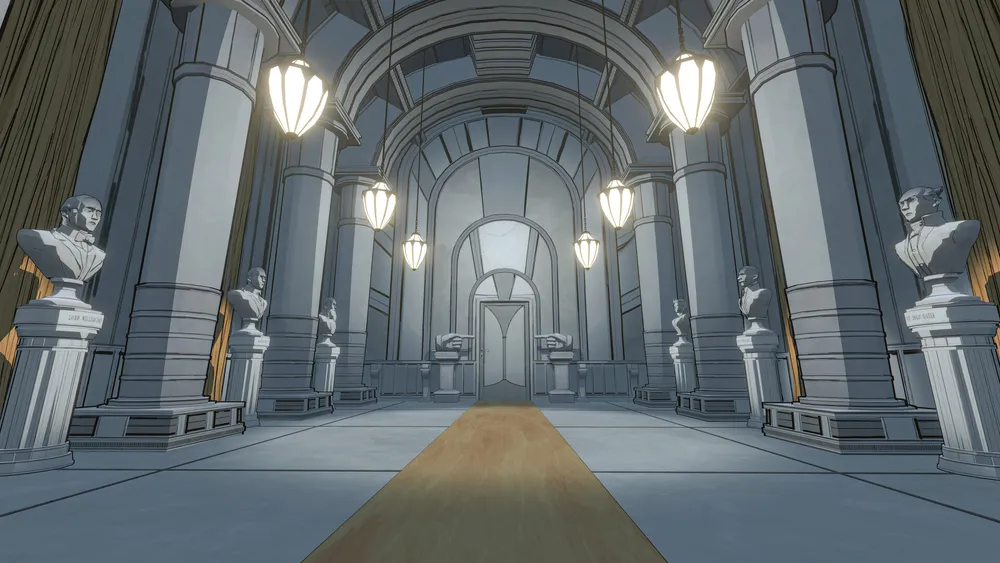
Blue Prince turns a changing floor plan into a puzzle about memory, evidence, and deliberate uncertainty. Its rooms matter because discovery is legible without being handed over.

Like a Dragon: Infinite Wealth Makes Side Stories Matter
Like a Dragon: Infinite Wealth understands that optional stories are not spare content. They give an RPG a second language for character, comedy, and place that the main plot cannot always use.
Steam Deck Verified Is Useful Only When It Explains the Compromise
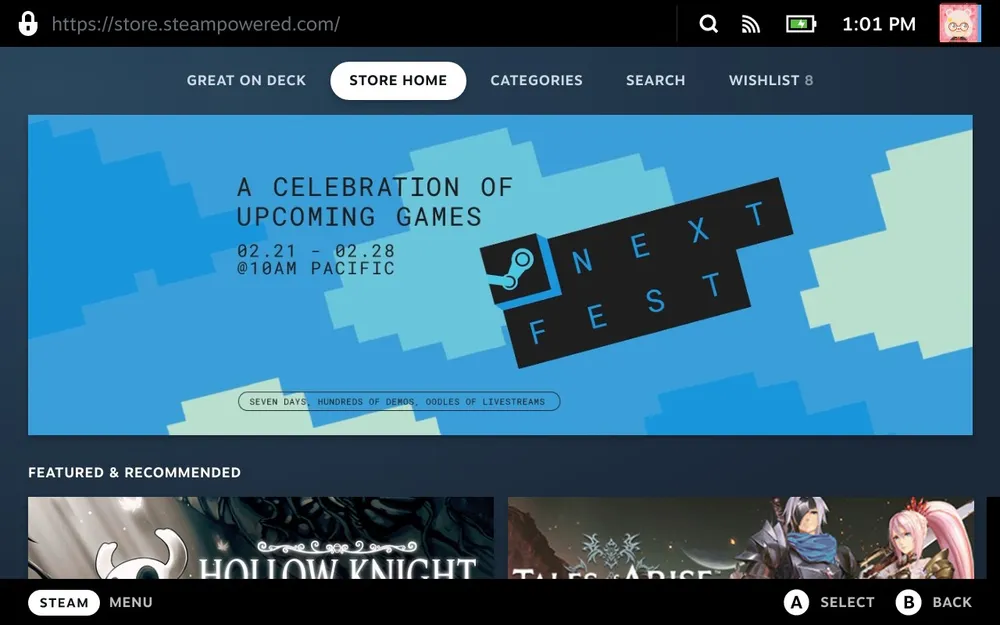
Steam Deck Verified is valuable when it explains controls, display, launchers, and system support. A green checkmark should start a purchase decision, not substitute for it.
Silent Hill 2 Remake Works Best When It Leaves You Uneasy
Silent Hill 2's remake has room to modernize its presentation, but its psychological horror works only when new technology sharpens uncertainty instead of explaining the town away.